

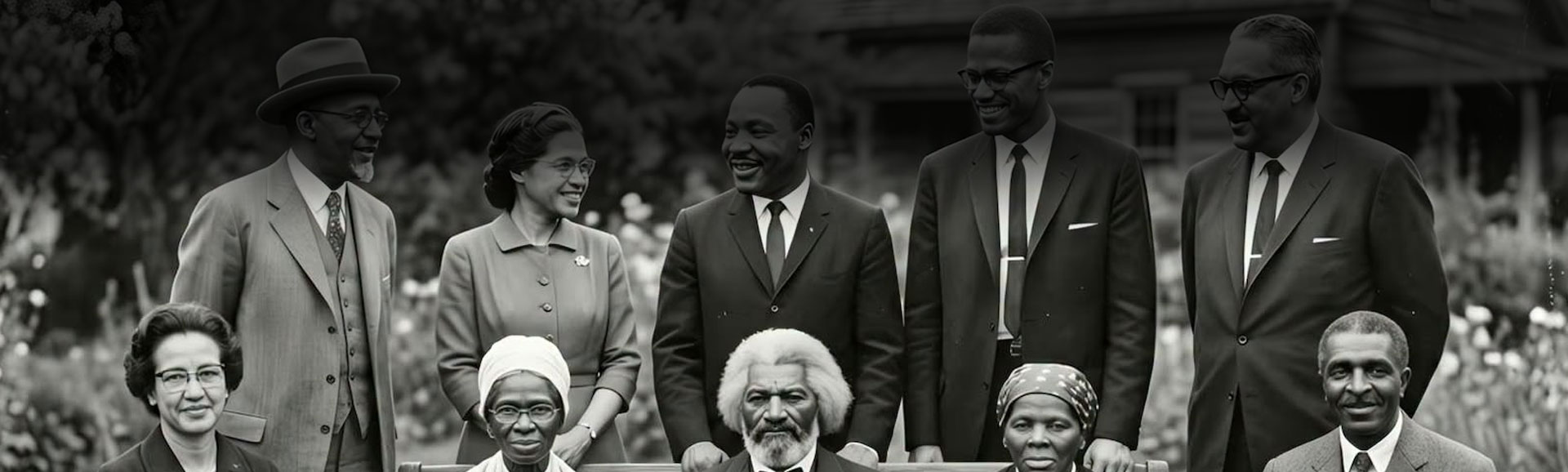
Notable Figures in Black History
African American history is a story of resilience, resistance, ingenuity and creativity—as these 12 men and women exemplify. Their achievements as activists, politicians, entrepreneurs, athletes and entertainers must be understood in the context of the centuries-long struggle for truly equal rights for Black Americans.

Alvin Ailey Jr
Alvin Ailey Jr. was a dancer, choreographer, and activist. When he formed the Alvin Ailey Dance Theater in 1958, he wanted to honor Black culture through dance.

Andrew Young
Andrew Jackson Young Jr. is an American politician, diplomat, and activist. Beginning his career as a pastor, Young was an early leader in the civil rights movement.
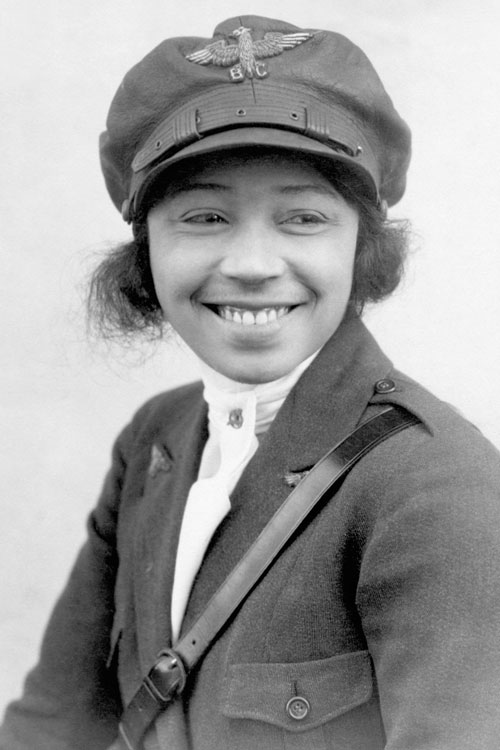
Bessie Coleman
In 1921, a time of both gender and racial discrimination, Coleman broke barriers and became the world's first Black woman to earn a pilot's license.

Billie Holiday
Billie Holiday, nicknamed “Lady Day” was an American jazz and swing singer who rose to fame in the 1930s. Known for her innovative phrasing and emotional delivery

Booker T. Washington
An American educator, author, and orator. Between 1890 and 1915, Washington was the primary leader in the African-American community.

Frederick Douglass
Frederick Douglass was a freed slave who spent his life outside of bondage as an author, an orator, and a leader of the abolitionist movement.
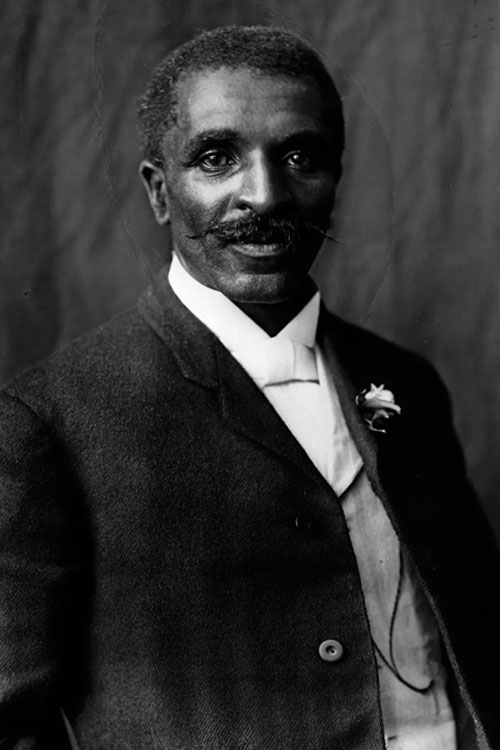
George W. Carver
Scientist and inventor who promoted alternative crops to cotton and methods to prevent soil depletion. He was one of the most prominent scientists of 20th century.

Harry Belafonte
Harry Belafonte was an American singer, actor, and activist. He made vital contributions to music, film and civil rights. becoming the first million-selling LP by a single artist.

Jackie Robinson
Jack Roosevelt Robinson was an American professional baseball player and the first African American to play in Major League Baseball in the modern era.

John H. Johnson
John Harold Johnson was an American business executive and publisher. He was the founder in 1942 of the Johnson Publishing Company, headquartered in Chicago, Illinois.

John Lewis
John Lewis was born as the son of sharecroppers in rural Alabama in 1940. He helped to organize sit-ins against segregated restaurants; during this period.

Josephine Baker
An African American-born French singer, dancer, actress, and activist who became a global political and successful African American performer in France.

Joycelyn Elders
Minnie Joycelyn Elders is an American pediatrician and public health administrator who served as Surgeon General of the United States from 1993 to 1994.

Katherine Johnson
In 1962, Katherine Johnson's brilliant math skills were called upon to help put John Glenn into orbit around the Earth. Later she worked on the Apollo Moon Landing project.

Madam C. J. Walker
Madam C. J. Walker was an American entrepreneur, philanthropist, political and social activist. Recorded as the first woman to become a self-made millionaire in America.

Mae C. Jemison
An American physician and astronaut. In 1987, she was the first African American woman to be accepted into NASA and the first African American woman in space.
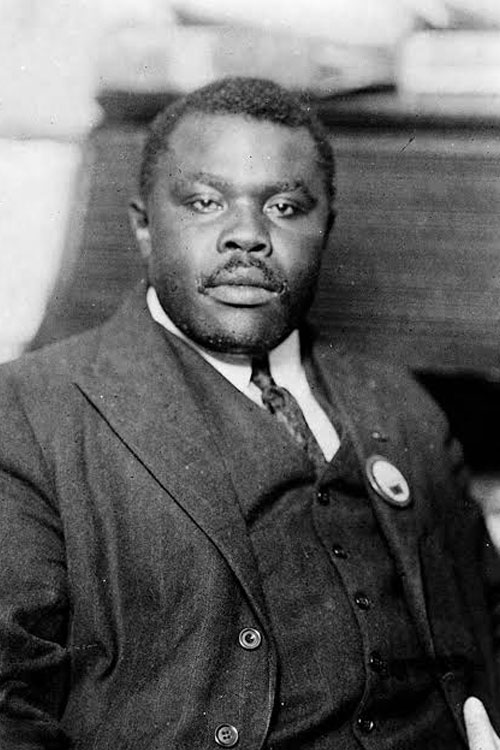
Marcus Garvey
Activist Marcus Garvey and his namesake ideology, Garveyism, advocated for Black separatism and nationalism campaigning for an end to European colonial rule in Africa.

Martin Luther King, Jr.
An American civil rights activist and Baptist minister who was a prominent leader of the civil rights movement from 1955 until his assassination in 1968.

Maya Angelou
Maya Angelou is remembered as a brilliant writer, poet, and civil rights activist. With more than 30 bestselling titles, Maya Angelou wrote 36 books.

Nat King Cole
Nathaniel Adams Coles was a singer, pianist, actor, and civil rights advocate who left a lasting mark on jazz and popular music with his smooth baritone and flawless phrasing.
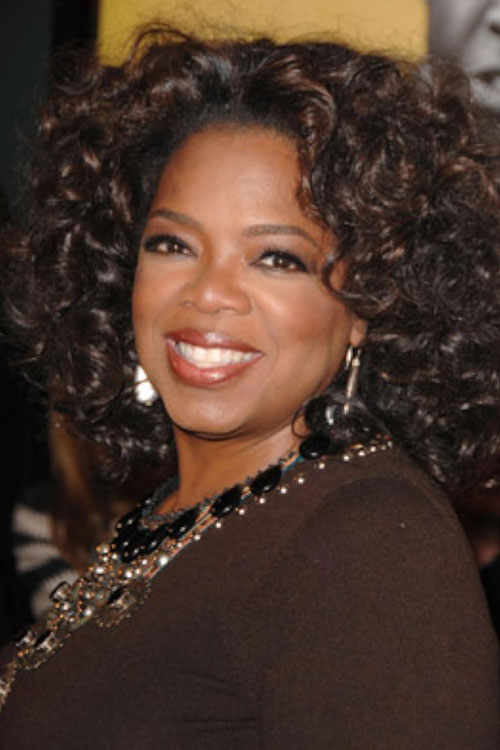
Oprah Winfrey
American media mogul, actress, producer, and philanthropist. She overcame a challenging childhood to become North America's first Black multi-billionaire.

Paul Robeson
Paul Robeson was an internationally acclaimed artist, scholar, athlete, and human rights advocate whose life reflected a profound commitment to justice and equality.

Shirley Chisholm
A true pioneer in both race and gender, She was the first Black woman elected to Congress and the first woman to run for the Democratic Party’s presidential nomination in 1972.

Wilma Rudolph
Wilma Rudolph was an American sprinter who overcame polio as a child and went on to become a world-record-holding champion in the 1956 and 1960 Olympic Games.
Image and research credits: Walker Family Collection, NPG/Smithsonian, Wikimedia Commons, Thought Co.
A Ranking of the Most Influential African Americans, Past and Present
The following list presents the most influential African Americans, past and present, as assessed by Temple University professor Molefi Kete Asante in 2002. The individuals are listed in alphabetical order and are not ranked by order of influence. Asante makes it clear that he intentionally excluded numerous popular contemporary figures because he believed that the hype surrounding a public persona does not necessarily determine an individual’s true importance or lasting influence.
Criteria
Asante used five factors in establishing the list:
- Significance in the general progress of African-Americans toward full equality in the American social and political system
- Self-sacrifice and a willingness to take great risks for the collective good
- Unusual will and determination in the face of great danger and against the most stubborn odds
- A consistent posture toward raising the social, cultural and economic status of African Americans
- Personal achievement that reveals the best qualities of the African American people
- Hank Aaron (1934–2021)
- Ira Aldridge (1807–1867)
- Muhammad Ali (1942–2016)
- Richard Allen (1760–1831)
- Marian Anderson (1897–1993)
- Maya Angelou (1928–2014)
- Arthur Ashe (1943–1993)
- Crispus Attucks (1723–1770)
- James Baldwin (1924–1987)
- Benjamin Banneker (1731–1806)
- Amiri Baraka (1934–2014)
- Romare Bearden (1911–1988)
- Mary McLeod Bethune (1875–1955)
- Guion Bluford (born 1942)
- Arna Bontemps (1902–1973)
- Edward W. Brooke (1919–2015)
- Gwendolyn Brooks (1917–2000)
- Blanche K. Bruce (1841–1898)
- Ralph Bunche (1903–1971)
- George Washington Carver (1864–1943)
- Shirley Chisholm (1924–2005)
- Kenneth B. Clark (1914–2005)
- John Henrik Clarke (1915–1998)
- John Coltrane (1926–1967)
- Bill Cosby (born 1937)
- Alexander Crummell (1819–1898)
- Countee Cullen (1903–1946)
- Benjamin O. Davis Jr. (1912–2002)
- Martin R. Delany (1812–1885)
- Frederick Douglass (1817–1895)
- Charles Drew (1904–1950)
- W. E. B. Du Bois (1868–1963)
- Paul Laurence Dunbar (1872–1906)
- Katherine Dunham (1909–2006)
- Duke Ellington (1899–1974)
- James Forten (1766–1842)
- John Hope Franklin (1915–2009)
- Henry Highland Garnet (1815–1882)
- Marcus Garvey (1887–1940)
- Prince Hall (1735–1807)
- Fannie Lou Hamer (1917–1977)
- Lorraine Hansberry (1930–1965)
- Dorothy Height (1912–2010)
- Matthew Henson (1866–1955)
- Charles Hamilton Houston (1895–1950)
- Langston Hughes (1901–1967)
- Zora Neale Hurston (1891–1960)
- Jesse Jackson (1941–2026)
- Mae Jemison (born 1956)
- Jack Johnson (1878–1946)
- James Weldon Johnson (1871–1938)
- John H. Johnson (1918–2005)
- Percy Julian (1899–1975)
- Ernest Just (1883–1941)
- Maulana Karenga (born 1941)
- Martin Luther King Jr. (1929–1968)
- Edmonia Lewis (1844–1907)
- Alain Locke (1885–1954)
- Joe Louis (1914–1981)
- Thurgood Marshall (1908–1993)
- Benjamin E. Mays (1894–1984)
- Elijah McCoy (1844–1929)
- Claude McKay (1890–1948)
- Oscar Micheaux (1884–1951)
- Dorie Miller (1919–1943)
- Garrett Morgan (1877–1963)
- Toni Morrison (1931–2019)
- Elijah Muhammad (1897–1975)
- Jesse Owens (1913–1980)
- Rosa Parks (1913–2005)
- Adam Clayton Powell Jr. (1908–1972)
- Colin Powell (1937–2021)
- A. Philip Randolph (1889–1979)
- Hiram Revels (1827–1901)
- Paul Robeson (1898–1978)
- Jackie Robinson (1919–1972)
- John Russwurm (1799–1851)
- Arturo Schomburg (1874–1938)
- Benjamin “Pop” Singleton (1809–1900)
- Mary Church Terrell (1863–1954)
- William Monroe Trotter (1872–1934)
- Sojourner Truth (c. 1797–1883)
- Harriet Tubman (1822–1913)
- Kwame Ture (1941–1998)
- Henry McNeal Turner (1834–1915)
- Nat Turner (1800–1831)
- David Walker (1796–1830)
- Madame C. J. Walker (1867–1919)
- Booker T. Washington (1856–1915)
- Ida B. Wells-Barnett (1862–1931)
- Phillis Wheatley (c. 1753–1784)
- Walter F. White (1893–1955)
- Roy Wilkins (1901–1981)
- Daniel Hale Williams (1856–1931)
- August Wilson (1945–2005)
- Oprah Winfrey (born 1954)
- Tiger Woods (born 1975)
- Carter G. Woodson (1875–1950)
- Richard Wright (1908–1960)
- Malcolm X (1925–1965)
The Ubuntu Cultural Pavilion honors the remarkable Black men and women whose lives, achievements, and contributions helped shape the history of Somerville and the surrounding community. Their stories reflect perseverance, leadership, creativity, service, and a commitment to creating opportunities for generations to come.
This collection highlights individuals whose contributions may not always appear in traditional accounts of local history, but whose presence and accomplishments are an essential part of Somerville’s story. From community leaders and educators to artists, veterans, entrepreneurs, activists, and families who helped build the community, each person represents an important chapter in the African American experience of Somerville.
Through these biographies, photographs, archival records, and historical research, the Ubuntu Cultural Pavilion seeks to preserve these stories and make them accessible to the community. By remembering those who came before us, we gain a deeper understanding of where we came from—and a greater appreciation for the people who helped make Somerville what it is today.
Their stories are part of our history. Their legacy is part of our future.
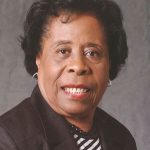 Evelyn S. Field
Educator | Civil Rights Activist
(1928–2015)
A pioneering educator, civil rights activist, and founding board member of Raritan Valley Community College from Somerville, New Jersey. She leaves behind a profound legacy of community leadership and barrier-breaking achievements
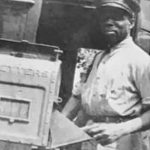 Frederick H. Moore, Sr.
Postal Clerk | Organist
(1893–1960)
In 1911, he became the first African-American graduate of Somerville High School. His high school attendance and graduation signaled more educational opportunities for African American children in the upper grades until segregation in Somerville’s schools ended 1918.
 Bernard “Bernie” Field
Supervisor | Organist
(1935–1994)
The Bernie Field Parking Deck was dedicated in 1995 for his service as a Supervisor at the Somerset County Parking Deck. He was a talented organist for St. Paul and St. Thomas AME Churches.
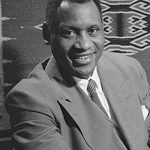 Paul Leroy Robeson
Artist | Scholar | Athlete |Human Rights Advocate
(1898–1976)
He an American bass-baritone concert artist, actor, professional football player, and activist who became famous both for his cultural accomplishments and for his political stances.
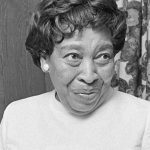 Mahala Fields Atchinson
Educator | Activist
(1904–1985)
In 1973, Mahala Field-Atchison’s dedication and activism were recognized by the Tinton Fall’s community with the naming of The Mahala Field Atchison Middle School.
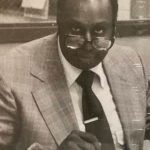 Stewart Schenck
Educator | Art Teacher
(1935–2009)
He was born in New Brunswick and moved to Somerville as a child. Upon graduation from Somerville High School, he attended Kutztown State Teachers College in PA, then returned to Somerville High to teach art education for 35 years, retiring in 1992.
Resting in Somerville’s New Cemetery are African American veterans who served in the United States Colored Troops (USCT) during the Civil War. These courageous men answered the call to defend the Union and helped advance the cause of freedom and the abolition of slavery.
Their service was especially significant at a time when African Americans faced discrimination even within the military. Despite these challenges, nearly 180,000 Black men served in the Union Army as USCT soldiers. The veterans buried here returned to their communities after the war and became part of the history and legacy of Somerset County.
Today, their graves stand as a lasting reminder of their courage, sacrifice, and determination to fight for a more just and united nation. 19 United States Colored Troops (USCT) are buried at the New Cemetery of Somerville located at 192 South Bridge Street, Somerville, New Jersey 08876.
View New Cemetery of Somerville on Google Maps.
- Beverly, William H private 29th us CT April 12th 1936
- Boyer, Henry Private H 127th usct January 9th 1911
- Dickerson ,Peter qm sergeant Btty f, 11th USCT April 1898
- Field, Emanuel corporal A, 41st usct October 3rd 1903
- Harris, Gabriel corporal Btty D 11th US c h a 1902
- Jewell, Theodore a privateA, usct new Cemetery
- Kline, Andrew privateA, 41st usct August 1st 1904
- Kline, John (1844- ) private F, 22nd usct February 16th 1891
- Layton, Nathan private, a 41st usct May 18th 1897
- Layton, Theodore private, h, 127th usct April 17th 1897
- Orton, Albert (AKA Auton Albert) private, 29th CT Infantry November 22nd 1932
- Pierson, Jo private, K 22nd us CT ( wounded Sept 29th 1864 at chaffin’s Farm Virginia) 1910
- Rodgers, Norman Corporal I, 8 usct, August 21st 1891
- Rodgers, Theodore private H 127th UCT July 2nd 1910
- Sloan, John musc, second usct Brigade band
- St John, Samuel, private, Btty K, 11th US c h a May 8th 1909
- Timbrook, James ( AKA tenbrook) Corporal, I , 8 usct [ wounded in action]
- Vandoren, Abram p. Private A, 41st, February 27th 1889
- Washington, George, private, C, 45th usct, 1914
Black Americans have advocated for civil rights since the earliest days of the United States. Leaders like Martin Luther King, Jr., and Malcolm X are two of the best-known civil rights leaders of the 20th century. Others, like Black journalist Ida B. Wells-Barnett and scholar W.E.B. DuBois, paved the way with their own contributions in the century’s first decades.
Innovations and advancements of Black scientists and educations transformed life in the 20th century. Charles Drew’s work in blood transfusions, for example, saved thousands of lives during World War II and is still used in medicine today. And Booker T. Washington’s pioneering work in agricultural research transformed farming.
- Archibald Alphonso Alexander
- Patricia Bath
- Bessie Coleman
- David Crosthwait, Jr.
- Mark Dean
- Charles Drew
- Matthew Henson
- Mae Jemison
- Frederick McKinley Jones
- Percy Lavon Julian
- Ernest Everett Just
- Mary McLeod Bethune
- Garrett Augustus Morgan
- Charles Henry Turner
- Madame C.J. Walker
- Booker T. Washington
- Daniel Hale Williams
Black Americans have served with distinction in all three branches of government, in the military, and in legal practice. Thurgood Marshall, a leading civil rights lawyer, ended up on the U.S. Supreme Court. Others, like Gen. Colin Powell, are notable political and military leaders.
- Ralph Bunche
- Benjamin Oliver Davis, Sr.
- Minnie Joycelyn Elders
- Jesse Jackson
- Daniel “Chappie” James
- Thurgood Marshall
- Kwesi Mfume
- Colin Powell
- Clarence Thomas
- Andrew Young
- Coleman Young
Whether performing on stage, in films, or on TV, Black Americans entertained the United States throughout the 20th century. Some, like Sidney Poitier, challenged racial attitudes with his role in popular films like “Guess Who’s Coming to Dinner,” while others, such as Oprah Winfrey, have become media moguls and cultural icons.
- Josephine Baker
- Halle Berry
- Bill Cosby
- Dorothy Dandridge
- Sammy Davis, Jr.
- Morgan Freeman
- Gregory Hines
- Lena Horne
- James Earl Jones
- Spike Lee
- Eddie Murphy
- Sidney Poitier
- Richard Pryor
- Will Smith
- Denzel Washington
- Oprah Winfrey
- Marian Anderson
- Louis Armstrong
- Harry Belafonte
- Chuck Berry
- Ray Charles
- Nat King Cole
- Miles Davis
- Duke Ellington
- Aretha Franklin
- Dizzy Gillespie
- Jimi Hendrix
- Billie Holiday
- Michael Jackson
- Robert Johnson
- Diana Ross
- Bessie Smith
- Stevie Wonder
Nearly every professional and amateur sport has a Black star athlete. Some, like Olympic track star Jackie Joyner-Kersee, have set new records for athletic achievement. Others, like Jackie Robinson, also are remembered for courageously breaking longstanding racial barriers in their sport.
- Hank Aaron
- Kareem Abdul-Jabbar
- Muhammad Ali
- Arthur Ashe
- Charles Barkley
- Wilt Chamberlain
- Althea Gibson
- Reggie Jackson
- Magic Johnson
- Michael Jordan
- Jackie Joyner-Kersee
- Sugar Ray Leonard
- Joe Louis
- Jesse Owens
- Jackie Robinson
- Tiger Woods